
Every second of every day, our eyes perform an astonishing feat of neurological precision. They dart rapidly from one object to another, smoothly follow moving targets, maintain steady fixation while we read, and constantly coordinate with the brain to make sense of the world around us. Most of these movements occur without conscious thought, yet they rely on some of the brain’s most complex neural networks.
Researchers say that when these movements begin to change, they may reveal far more than problems with vision. Abnormal eye movements are emerging as potential biomarkers for a wide range of neurological and psychiatric disorders, offering clinicians a unique glimpse into brain function which is both non-invasive and objective.
Although eye movement analysis is already used in specialised neurological settings, advances in artificial intelligence (AI), eye-tracking technology and digital diagnostics are raising the intriguing possibility that future eye movement tests help distinguish between normal ageing, neurological disease and even mental health disorders.
Every eye movement begins in the brain. Unlike many bodily functions which depend primarily on muscles, eye movements require the coordinated activity of multiple brain regions, including the frontal and parietal lobes, cerebellum, basal ganglia and brainstem. These structures work together continuously to ensure our eyes move accurately, maintain balance and respond appropriately to visual stimuli.
Because these same brain regions are affected in many neurological and psychiatric conditions, subtle abnormalities in eye movement may appear long before more obvious symptoms develop.
“The eyes provide one of the most accessible ways to study brain function in real time,” many neuroscientists have suggested, highlighting the growing role of eye-tracking in neurological research.
Understanding Different Types Of Eye Movements
Researchers generally focus on three major categories of eye movement:
Smooth Pursuit
This allows the eyes to follow a moving object continuously. Whether watching a tennis ball, following a passing vehicle or observing someone walking across a room, smooth pursuit keeps the object centred on the retina.
Saccades
These are the rapid jumps the eyes make when shifting attention between objects. Reading this sentence, for example, involves hundreds of tiny saccades every minute.
Fixation
This refers to the ability to hold the eyes steadily on a single point without drifting or making unnecessary movements.
Each movement depends on different neural pathways, meaning abnormalities can provide clues about which parts of the brain may be affected.
Here are some different conditions which can be identified by changes in eye movement:
Parkinson’s Disease
Among neurological disorders, Parkinson’s disease has become one of the most extensively studied in eye-tracking research.
Although Parkinson’s is widely recognised for tremors and slowed movement, many patients develop abnormalities in eye movements years before these classic motor symptoms become obvious.
Researchers have identified slower saccades, difficulty initiating eye movements and impaired smooth pursuit in many individuals with Parkinson’s disease. These changes reflect dysfunction within the basal ganglia, the deep brain structures responsible for coordinating movement.
Scientists are now investigating whether sophisticated eye-tracking systems could help identify Parkinson’s earlier or monitor disease progression more accurately alongside conventional neurological examinations.
Alzheimer’s Disease
Eye movements also appear to change as cognitive function declines. People living with Alzheimer’s disease may demonstrate slower visual scanning, longer fixation times and difficulty locating important visual information within complex scenes.
Researchers believe these abnormalities reflect changes in attention, memory and executive function rather than problems with the eyes themselves. Eye-tracking studies have also explored individuals with mild cognitive impairment (MCI), a condition which sometimes precedes Alzheimer’s disease.
If validated through larger clinical studies, eye movement analysis could eventually contribute to earlier cognitive screening, particularly when combined with retinal imaging and artificial intelligence.
Multiple Sclerosis
Multiple sclerosis (MS) damages nerve pathways responsible for transmitting information throughout the brain and spinal cord.
When these pathways involve areas controlling eye movement, patients may experience impaired smooth pursuit, unstable fixation and reduced coordination between both eyes.
Neurologists already assess eye movements during routine clinical examinations, but digital eye-tracking technology offers far greater precision. Rather than relying solely on observation, clinicians can measure movement speed, accuracy and coordination in milliseconds, potentially detecting changes too subtle for the human eye to recognise.
Psychiatric Illnesses
Schizophrenia as a psychiatric Illness has attracted particular attention. For decades, studies have consistently demonstrated that many individuals with schizophrenia experience abnormalities in smooth pursuit eye movements. They may struggle to maintain continuous tracking of moving objects, making frequent corrective saccades instead.
These findings have been replicated across multiple research centres, making smooth pursuit one of the most extensively studied physiological features associated with schizophrenia.
Other psychiatric conditions are also under investigation. Studies have identified altered eye movement patterns in depression, bipolar disorder, autism spectrum disorder, attention-deficit/hyperactivity disorder (ADHD) and anxiety disorders. Researchers are examining whether differences in attention, emotional processing and executive function produce measurable changes in fixation, pupil responses and visual scanning behaviour.
However, scientists emphasise that no single eye movement pattern is currently capable of diagnosing any psychiatric disorder.
Distinguishing Disease From Normal Ageing
One of the greatest challenges facing researchers is separating disease-related changes from the normal effects of ageing. Healthy ageing naturally affects visual processing speed.
Older adults often exhibit slower saccades, longer fixation times and slightly reduced smooth pursuit compared with younger individuals.
The difficulty lies in determining where normal ageing ends and disease begins.
Artificial intelligence may offer a solution. By analysing thousands, or eventually millions, of eye movement recordings across different ages and health conditions, AI algorithms may learn to identify subtle combinations of features that distinguish healthy ageing from Parkinson’s disease, Alzheimer’s disease or psychiatric illness.
Rather than relying on one abnormal measurement, future systems may analyse dozens or even hundreds of movement characteristics simultaneously.
Looking Towards The Future
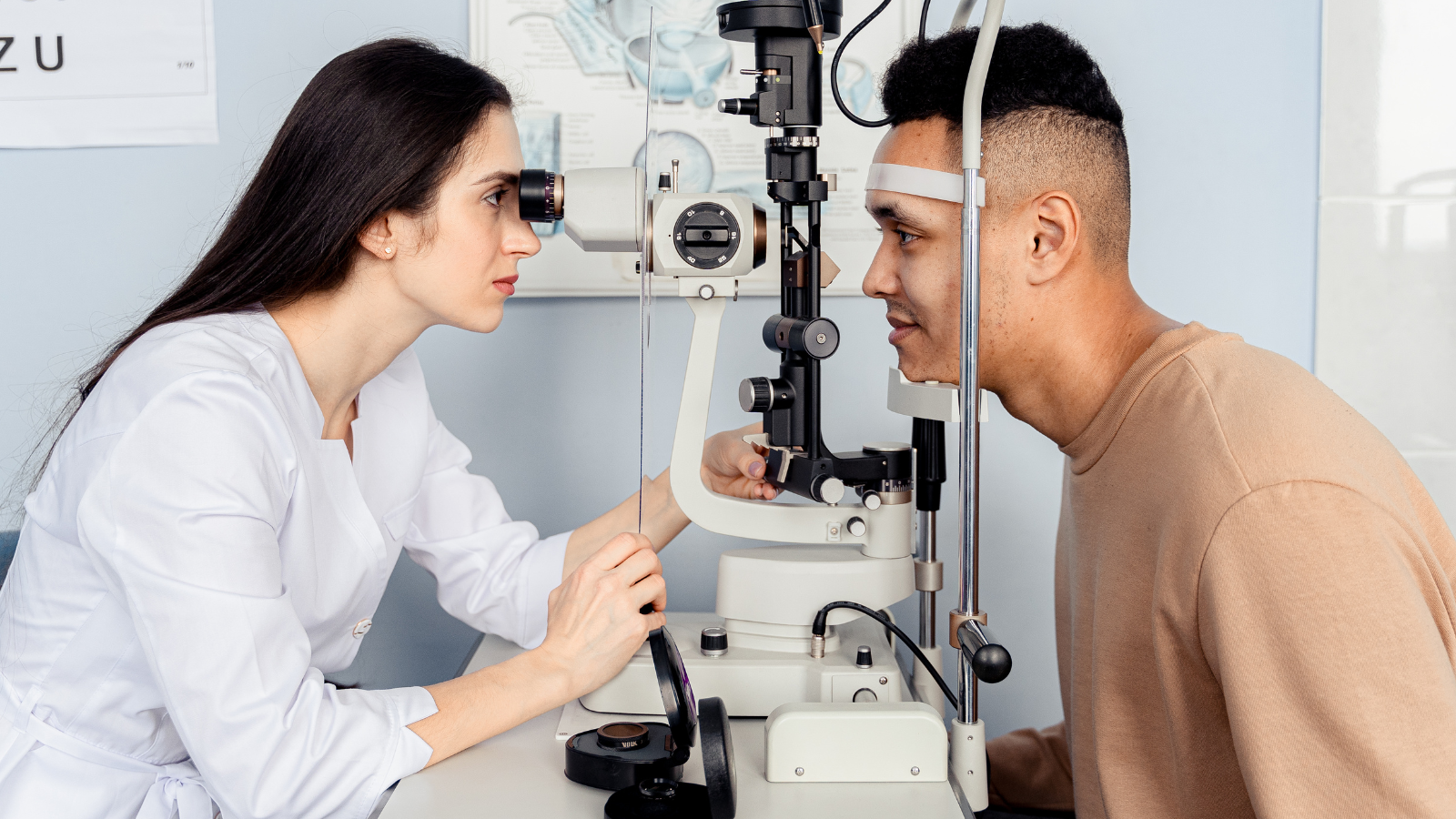
The routine eye examination of the future might look slightly different to the ones we have today. Alongside retinal imaging and OCT, you spend two minutes following moving dots across a screen while an eye tracker records thousands of tiny movements.
AI would then analyse your smooth pursuit, saccades, fixation stability and pupil responses before comparing them with millions of previous examinations.
Within moments, your clinician would receive a report identifying not only your glaucoma risk but also whether your eye movement patterns suggest healthy ageing or indicate subtle neurological changes which warrant further investigation.
We aren’t quite there yet, but still, we can imagine. Based on the research, this futuristic appointment belongs to the realm of possibility.