
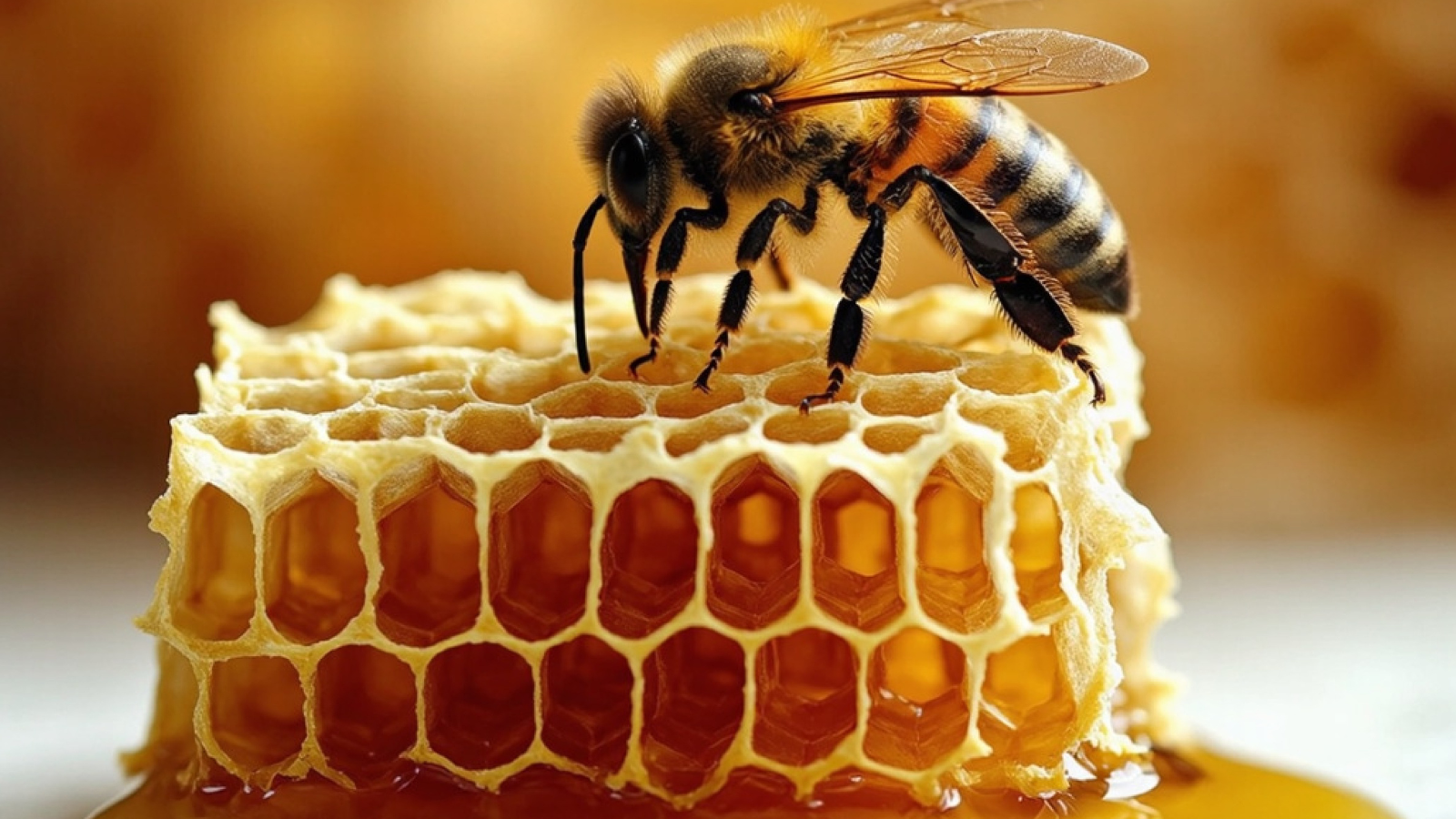
As an animation enthusiast, one of my favourite movies of all time is Bee Movie. The bees are championed for their role in the ecosystem, and given their place in the limelight. Because they are so small, bees are often overlooked; however, in this movie, they demand to be heard and heard they are! Now it seems they are again taking centre stage, this time for growing scientific research into the healing properties of compounds found in their ‘venom’.
Researchers are investigating whether melittin, the main component of honeybee venom, could become a powerful weapon against aggressive breast cancers.
This might sound more like folklore than modern medicine, however, a growing body of scientific research is prompting oncologists, molecular biologists and pharmaceutical researchers to take a closer look at one of nature’s most potent compounds.
Just to fill you in on the picture, bee venom has actually been used in medicines for thousands of years. This hasn’t been limited to just one culture, but rather across continents, most prominently in parts of Asia, Eastern Europe and the Middle East.
There is a special word for the use of products from honeybees. This is apitherapy. The practice involves using venom, honey, propolis and royal jelly for therapeutic properties.
In modern medicine, researchers have investigated bee venom for its anti-inflammatory, antimicrobial and immune-modulating effects. Current studies are exploring its potential in conditions such as rheumatoid arthritis, osteoarthritis, multiple sclerosis, chronic pain and certain skin disorders.
It’s into this arena that groundbreaking research into the use of bee venom to treat aggressive breast cancers has been highlighted. Laboratory research suggests that compounds in bee venom may possess antiviral and antioxidant properties.
What Exactly Is Melittin?
Rather than focusing on the venom itself, scientists are investigating melittin. This is a peptide which makes up around half of honeybee venom’s dry weight. Laboratory studies suggest melittin can selectively attack certain breast cancer cells, disrupt the signals that allow tumours to grow and spread, and even enhance the effectiveness of existing cancer treatments. While these findings remain firmly in the research stage, they are opening intriguing possibilities for the future of precision oncology.
A natural compound attracting scientific attention
Honeybee venom has been used in traditional medicine for centuries to treat inflammatory conditions, but only in recent decades have researchers begun to understand the biological properties of its individual components.
Melittin is the best-studied of these molecules. It is known for its ability to interact with cell membranes, forming pores that can destabilise and destroy cells. Although this characteristic makes bee stings painful, researchers believe the same mechanism may be harnessed to target cancer cells under carefully controlled conditions.
A comprehensive 2026 review published in Exploration of Targeted Anti-Tumor Therapy examined recent advances in bee venom research and concluded that melittin demonstrates significant anti-cancer activity in laboratory models of breast cancer. The review highlighted its ability to trigger apoptosis, inhibit tumour growth pathways and reduce cancer cell migration while also discussing new strategies to deliver the compound more safely to tumours.
Targeting aggressive breast cancers
One reason bee venom research has attracted so much attention is its apparent activity against aggressive breast cancer subtypes that remain difficult to treat.
Among these is triple-negative breast cancer, which lacks the hormone receptors targeted by many conventional therapies. Triple-negative disease often grows rapidly, has a higher likelihood of recurrence and offers fewer treatment options than other forms of breast cancer.
Researchers are also investigating melittin’s effects on HER2-positive breast cancer, another aggressive subtype driven by excessive HER2 protein activity.
According to a recent article in Health And Me: “Bee venom can kill cancer cells. In a discovery which has created quite a buzz is when Australian scientists found that honeybee venom can kill some of the most aggressive types of breast cancer cells. This includes triple-negative breast cancer, while leaving normal cells unharmed.”
The article specifies that the study was conducted by Dr. Ciara Duffy, from the Harry Perkins Institute of Medical Research and the University of Western Australia. The study involved testing the venom from over 300 bumblebees and honeybees. These were collected in Australia, Ireland, and England.
“The results were published in the journal Nature Precision Oncology, which revealed that venom along with melittin, which is its key component, showed a potent and selective anti-cancer effect,” reads the article.
Lead researcher Dr Ciara Duffy said at the time, “We found both honeybee venom and melittin significantly and preferentially reduced the viability of triple-negative breast cancer and HER2-enriched breast cancer cells.”
The study also found that melittin disrupted important growth signals involving epidermal growth factor receptor (EGFR) and HER2 within minutes, reducing the ability of cancer cells to multiply.
More Than Simply Destroying Cancer Cells
Scientists believe melittin’s potential extends beyond directly damaging tumour cells. Experimental studies suggest the compound may influence several biological pathways involved in cancer progression.
Researchers have observed that melittin may trigger programmed cell death (apoptosis), suppress tumour cell proliferation, reduce cancer cell invasion and migration, interfere with inflammatory signalling associated with tumour growth; and increase sensitivity to chemotherapy in laboratory models.
These multiple mechanisms make melittin particularly attractive as researchers increasingly seek combination therapies capable of attacking cancer from several directions simultaneously.
Still despite its promise, melittin presents a major obstacle. The same ability that enables it to destroy cancer cells also allows it to damage healthy tissues if delivered throughout the body. This toxicity has prevented bee venom itself from becoming a practical cancer treatment.
The focus has therefore shifted towards developing sophisticated delivery systems capable of transporting melittin directly to tumours while minimising exposure to healthy organs.
Researchers are investigating nanoparticles, liposomes, antibody-guided delivery systems and biodegradable carriers which release melittin only when they reach cancer tissue.
For these reasons, many questions and challenges remain.
Separating Science From Social Media
It must be said that while bees are the tiny heroes Bee Movie makes them out to be, all claims about bees on social media are not necessarily correct. Interest in bee venom has fuelled misleading claims online so it’s always best to check any claims about it with reputable sources.
To give an example, social media posts have suggested that bee venom ‘kills breast cancer in 60 minutes’ or represents a natural cure for cancer. Such statements misrepresent the underlying science.
Cancer organisations and researchers continue to warn that people should never attempt to self-administer bee venom or rely on unproven alternative therapies in place of evidence-based medical treatment.
Whether melittin ultimately succeeds in human clinical trials remains uncertain. However, the growing research highlights an important trend shaping modern oncology. Scientists are increasingly looking beyond conventional chemistry to discover highly targeted biological compounds capable of attacking cancer in entirely new ways.