
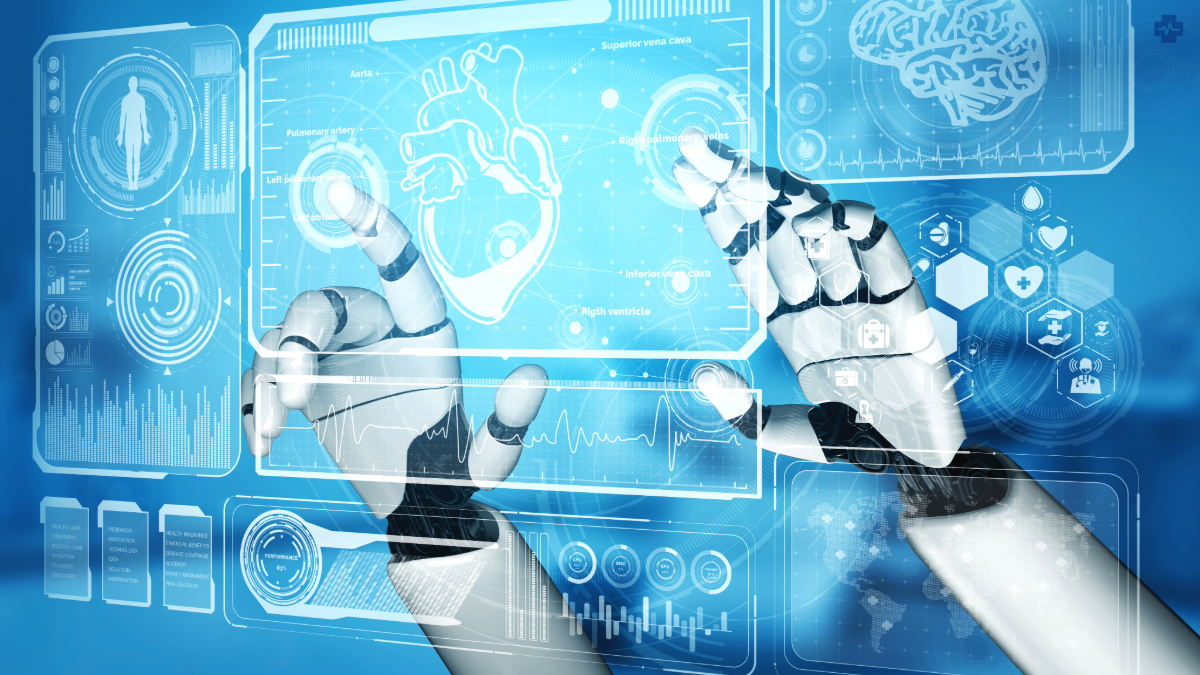
Many experts have theorized on the possibilities that Artificial intelligence (AI) holds for the medical profession. However, one area which has left a blazing trail in breaking news reports is the potential that AI has to transform every facet of cardiovascular research and practice.
AI and machine learning tools are able to process enormous amounts of data to provide precision diagnoses and treatments, and these same methods can be applied to heart health.
Groundbreaking Innovation Welcomes In New Possibilities
GE HealthCare recently announced the launch of a pivotal AI-powered tool, Flyrcado. In an official statement given to the media, Eigil Samset, general manager of Cardiology Solutions at GE HealthCare, announced: “The future of healthcare lies in the integration of advanced technologies with human expertise, allowing for a more holistic, data-driven and efficient cardiology care pathway. Cardiovascular diseases are the leading cause of death globally, so it is critical that we continue our commitment to innovations in this space – our newest solutions showcased at ACC will help transform and optimize the diagnostic workflow.”
Flyrcado is FDA-approvaed and is for patients with known or suspected coronary artery disease (CAD). Its application allows for more effective, efficient diagnosis of cardiac conditions than Myocardial Perfusion Imaging (MPI), the predominant procedure used in nuclear cardiology today.
It is estimated that about six million MPI procedures are undertaken each year. These are used to show blood flow through the heart muscle to detect any anomalies and concerns. PET is the most effective form of MPI.
Flyrcado is able to combine exercise stress testing with cardiac PET imaging for Coronary Artery Disease (CAD). “The launch of Flyrcado represents a significant advancement in cardiac care, providing a new, highly effective diagnostic tool for those with known or suspected coronary artery disease,” said Eric Ruedinger, vice president and general manager of GE HealthCare’s Pharmaceutical Diagnostics segment for the U.S. and Canada.
Combining AI With Heart Care Technology
A report issued by the American Heart Association in the Circulation journal highlights further areas in heart care which can be transformed through AI-powered technology. Here are just some of them:
Electrocardiography
This field of science concerns the heart’s electrical activity. AI is able to facilitate ECG interpretation through identifying subtle results which human professionals are unable to see. As a result, changes and abnormalities which aren’t yet evident can be detected by AI.
Imaging
Imaging is important for diagnosis and treatment. Advancements in AI and machine learning have made it possible to process cardiac and brain images in such a way that inconsistencies in human interpretation are ruled out. At the same time, AI’s capacity to handle large amounts of data, as given through images, can also help to relieve overburdened professionals.
Wearable & Implantable Technologies
These technologies are used to provide continued monitoring of health conditions, as well as to facilitate the necessary intervention. AI and machine learning can aid the remote monitoring which these technological devices require.
Genetics
AI algorithms have the ability to detect genetic abnormalities and variants.
There have been many historic milestones in the treatment of heart conditions through the decades. In 1967, Christiaan Barnard performed the first human-to-human heart transplant operation.
The advent of AI is another pivotal milestone and according to expert assessments and predictions, the most significant one.