
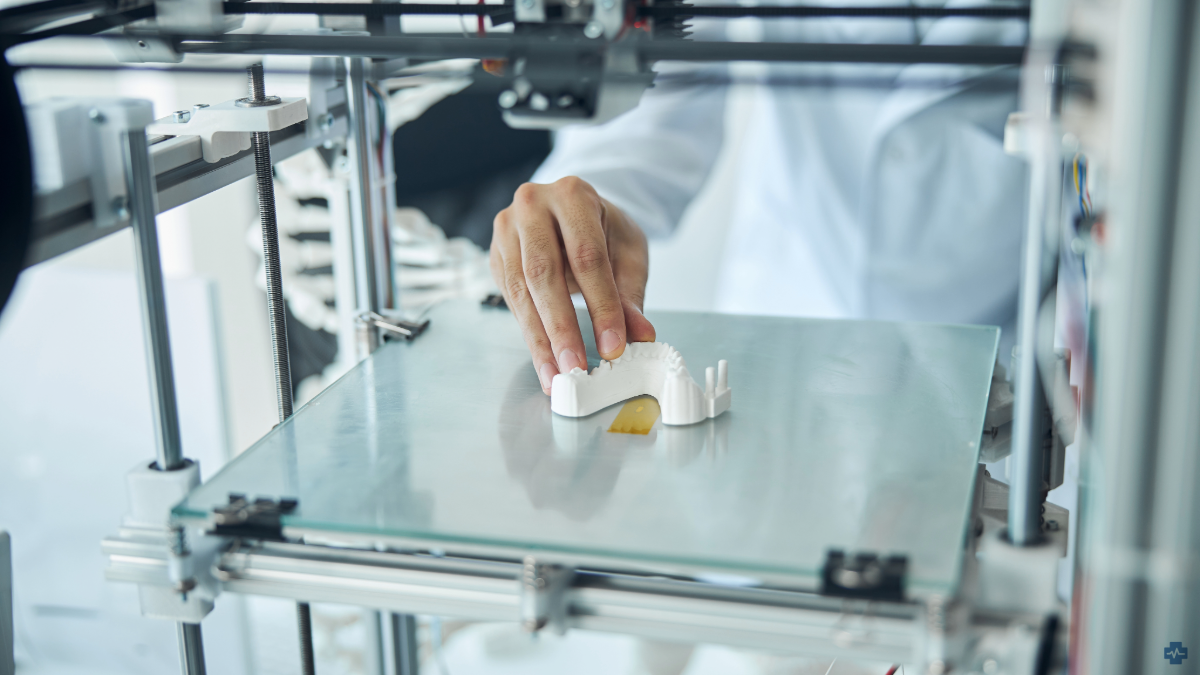
Dentistry is undergoing a technological transformation, driven by rapid advancements in 3D printing and artificial intelligence (AI). These innovations are not only reshaping how dental professionals deliver care but are also solving longstanding problems related to cost, access, accuracy, and patient experience.
As of 2025, these technologies are moving beyond early adoption stages and are now central to many dental practices across the globe.
The Role of 3D Printing in Modern Dentistry
3D printing, also known as additive manufacturing, is being hailed as a game-changer in restorative and orthodontic dentistry. Traditionally, creating dental crowns, bridges, dentures, or orthodontic devices required labour-intensive procedures involving impressions, moulds, and several patient visits. With 3D printing, dentists can now produce precise dental components in a matter of hours rather than weeks.
According to a 2024 report by MarketsandMarkets, the global dental 3D printing market is projected to reach $9.8 billion by 2028, growing at a CAGR of 25.7%. This growth is driven by demand for custom-made dental appliances that are produced quickly and cost-effectively.
With intra-oral scanners and CAD (Computer-Aided Design) software, digital impressions can be taken directly from the patient’s mouth. These scans are then used to create 3D models which guide the printing of crowns, aligners, and surgical guides with micron-level accuracy. The result is a drastic reduction in human error and enhanced comfort for patients who no longer need to endure messy traditional impressions.
Another remarkable implication of 3D printing is its ability to support same-day dentistry. With in-office printers like Formlabs Form 3B+ or SprintRay Pro, dentists can produce crowns and bridges during a single appointment. This not only improves patient convenience but also increases clinic efficiency and reduces reliance on external dental labs.
Artificial Intelligence: The Brain Behind Modern Dental Diagnostics
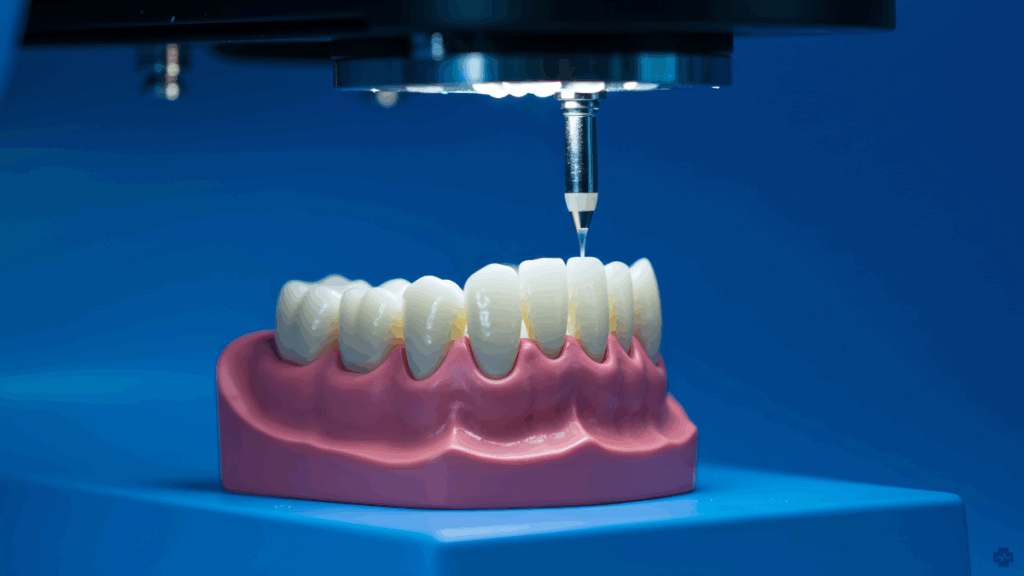
Much as 3D printing is changing the landscape of dentistry, so too is AI rapidly being integrated into diagnostic tools, treatment planning systems, and patient communication platforms.AI technology brings automation, pattern recognition, and data analysis into dental workflows, leading to earlier and more accurate diagnoses.
AI-powered software can now analyse radiographs (X-rays), intra-oral photos, and Cone-Beam Computed Tomography (CBCT) scans with high precision. For instance, Pearl AI, approved by the FDA in 2022, assists dentists in detecting conditions like cavities, bone loss, and periapical lesions. In peer-reviewed studies, AI tools have demonstrated diagnostic accuracy rates upwards of 90%, often exceeding human capabilities in early detection.
Such early identification is critical in preventing complications and improving long-term outcomes. AI algorithms can highlight anomalies invisible to the naked eye and provide risk assessments, helping clinicians make informed treatment decisions.
AI also enables the creation of personalised treatment plans. Software systems such as Dentsply Sirona’s DS Core or Overjet Dental AI can integrate patient history, diagnostic images, and clinical data to design optimised and individualised approaches. In orthodontics, platforms like Invisalign’s ClinCheck use AI to simulate tooth movements and predict results before treatment begins.
Solving Problems in Dentistry
Technologies like 3D printing and AI are addressing some of the field’s most persistent issues.
Reducing Human Error
Historically, the manual fabrication of dental prosthetics involved a high margin for error. Ill-fitting crowns or dentures led to discomfort, functional issues, and repeated visits. 3D printing offers unmatched precision, virtually eliminating discrepancies caused by traditional impressions or manual modeling.
Similarly, diagnostic oversights or inconsistent treatment plans are common in conventional dentistry. AI brings consistency by analysing vast datasets and reducing subjective bias, which improves diagnostic reliability and patient trust.
One of the major barriers to dental care is limited access to specialists and laboratories. This is especially true in rural or underprivileged communities.
3D printing enables dentists to offer complex restorations in-house, bypassing the need for external labs. This significantly reduces costs and speeds up treatment timelines.
AI, on the other hand, powers teledentistry platforms which allow for remote consultations, screenings, and monitoring. With tools like SmileSnap and MouthWatch, patients can submit images and receive AI-assisted evaluations, improving access to care where physical visits are challenging.
Toward a Smarter, Faster, More Inclusive Dental Future
By eliminating inefficiencies, improving diagnostic accuracy, and enhancing patient experience, these technologies are solving problems that have long plagued the industry.
As adoption continues to rise and tools become more affordable, patients and practitioners alike can look forward to a future where dental care is smarter, faster, and more personalised than ever before.