
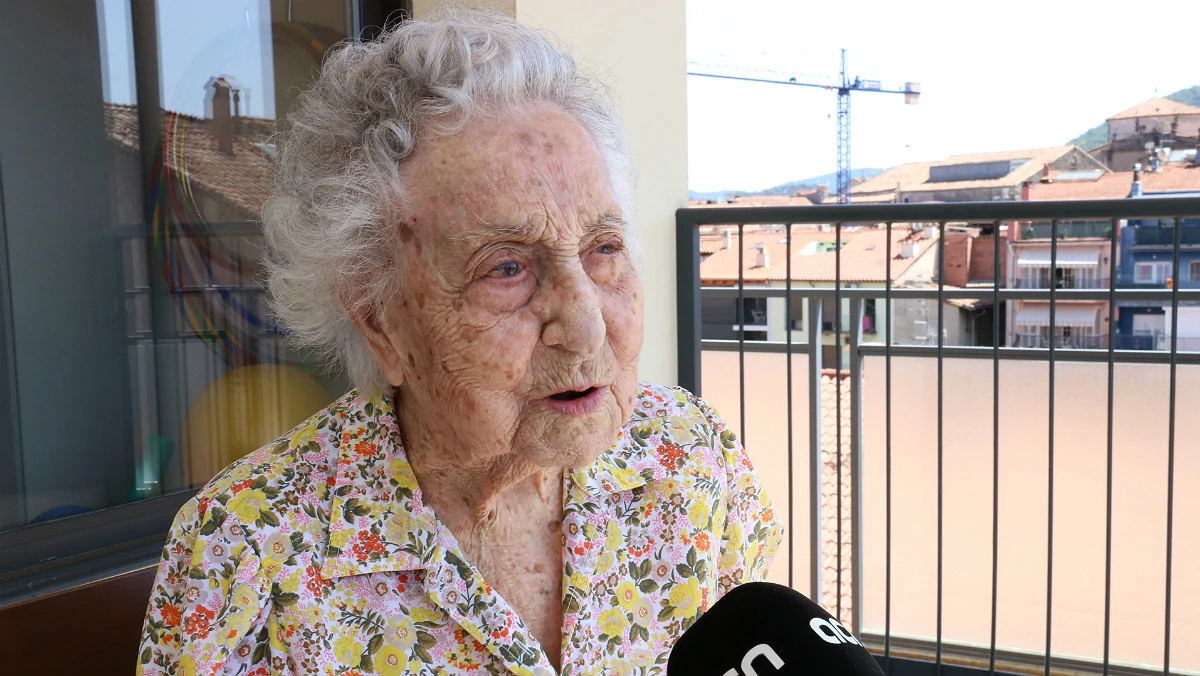
“When a supercentenarian, someone who is older than 110 years old, is interviewed, they are inevitably asked to share their tips for longevity. But what if their secret could be studied scientifically?” asks a breaking CNN news report.
Every now and then there’s a news item which makes me stop and pay attention. This story, about 117-year-old Marian Branyas Morera was one of them.
What made this unassuming lady remarkable was not just that she lived to be almost 120 years old, but that in spite of her age, she was strong, vibrant and seemingly immune to many age-related conditions.
It’s not just my attention she captured. Maria’s story won the interest of scientists and researchers around the world. Like me, they wanted to know what her secret was. How did she age so well? And what can the rest of the world learn from her?
The interest in her was fuelled by the scientific findings gathered following her death. As I read up on Maria, I was amazed to see how many news sites were reporting evidence-based findings related to her ‘longevity secrets’, if we could call them that.
As an MSN report explained, “Maria Branyas Morera was the world’s oldest person when she died at 117 last year. Now, scientists have searched within her genes for the answers to her long life. Before she died, Branyas allowed doctors to collect samples of her blood, saliva, urine, and stool to shed light on her biology and what had allowed her to live for so long.”
This scientific analysis which followed her passing suggested that her resilience stemmed from protective genetics, unusually low systemic inflammation, and a gut microbiome which retained features more typical of someone many decades younger.

News reports have called her a rare example of extreme longevity coupled with remarkable health. Despite showing typical biological markers of ageing, such as shortened telomeres, and immunosenescence, she remained largely free from usual age-related illnesses, such as dementia, cancer, and diabetes.
Researchers have argued that her life may provide a living blueprint for interventions aimed at extending ‘healthspan’, which is the period of life spent in good health.
What comes to mind when reading about Maria is The Okinawa Centenarian Study, which is something I first heard of years ago. This study, of the inhabitants of Okinawa, is now remarkably in its 50th year. It has followed more than a thousand people aged 100 or older, aiming to uncover genetic and environmental factors which promote healthy ageing.
Researchers have found that Okinawans have far lower risks of heart disease, stroke and cancer than comparable Western populations. Compared with North Americans, Okinawans have about eighty percent less incidence of breast and prostate cancer, half the hip fracture risk, and notable mental clarity in old age.
Key elements of their longevity include a largely plant-based diet. They have a high intake of vegetables, fruits, legumes (notably soy), and regular use of root vegetables, such as sweet potatoes. Their diet provides a mix of complex carbohydrates, antioxidants, fibre, and nutrients which are beneficial for reducing inflammation and regulating blood sugar.
The traditional dietary practice of hara hachi bu, literally ‘eat until eighty percent full,’ helps moderate caloric intake. Okinawans traditionally consume fewer calories than many Western populations, which appears to correlate with reduced incidence of metabolic disease.
In the United Kingdom, experts studying ageing often point to both genetic and lifestyle factors. One UK scientist involved in Okinawa research, Bradley Willcox, has noted, “A good lot of them (the Okinawans) are healthy until the very end.”
He emphasises that the pattern is not merely adding years to life but preserving function and preventing disease. UK sources frequently highlight that strong social ties, purpose, moderate diet, and low-stress lifestyles appear as consistent correlates of long life and reduced chronic disease.

Viewed from the framework offered by Okinawa, Maria Branyas Morera’s case becomes even more compelling. Her preserved cognitive function, despite expected genetic and biological wear, mirrors Okinawan observations of people who remain mentally sharp far into old age.
Her low systemic inflammation parallels findings from Okinawa that reduced chronic inflammation is a cornerstone of disease resistance. Her youthful gut microbiome echoes the Okinawan high-fibre, plant-rich diets which seem to maintain gut diversity and produce beneficial metabolites tied to longevity.
Her life also reflects social engagement and adaptation, not isolation, even at extreme age. Though her personal lifestyle, diet, and genetic background are unique, the overlap with Okinawan longevity factors is striking.
The convergence of data from Maria and Okinawa offers valuable clues about what might be possible. This includes healthy years, lower disease burden, preserved cognition, and greater autonomy in old age. For public health, this suggests strategies should emphasise preventive measures, such as diet, community, psychological wellbeing, and physical activity; rather than reacting only to disease once it appears.
However, caution is needed. Supercentenarians are statistically rare, says the experts in news reports. Their genetic endowment and lifetime experiences are often unusual. What works for one may not be scalable in the same way for many. However, we can still definitely learn from them and adopt key lifestyle and diet changes to facilitate our own longevity.
Ageing is something we all face, however Maria Branyas Morera’s extraordinary lifespan and health and findings from the Okinawan study, suggest that ageing need not be simply about decline.
While we may not all live to 117, adopting some of these patterns may allow more of us to remain healthy, sharp, and disease-resistant into our later decades.
Maria inspired me by the way she lived a full life and exemplified the true meaning of this emerging concept of ‘healthspan’. Novelist George Meredith said,“Don’t count your years, make your years count.” Maria enjoyed the best of both: years to count, and years that counted.
Still, in spite of the scientific findings from studies of 117-year-old Maria, the supercentenarian remains something of an enigma. As a researcher said in the Smithsonian Magazine, “She had cells that seemed younger than her age.”