
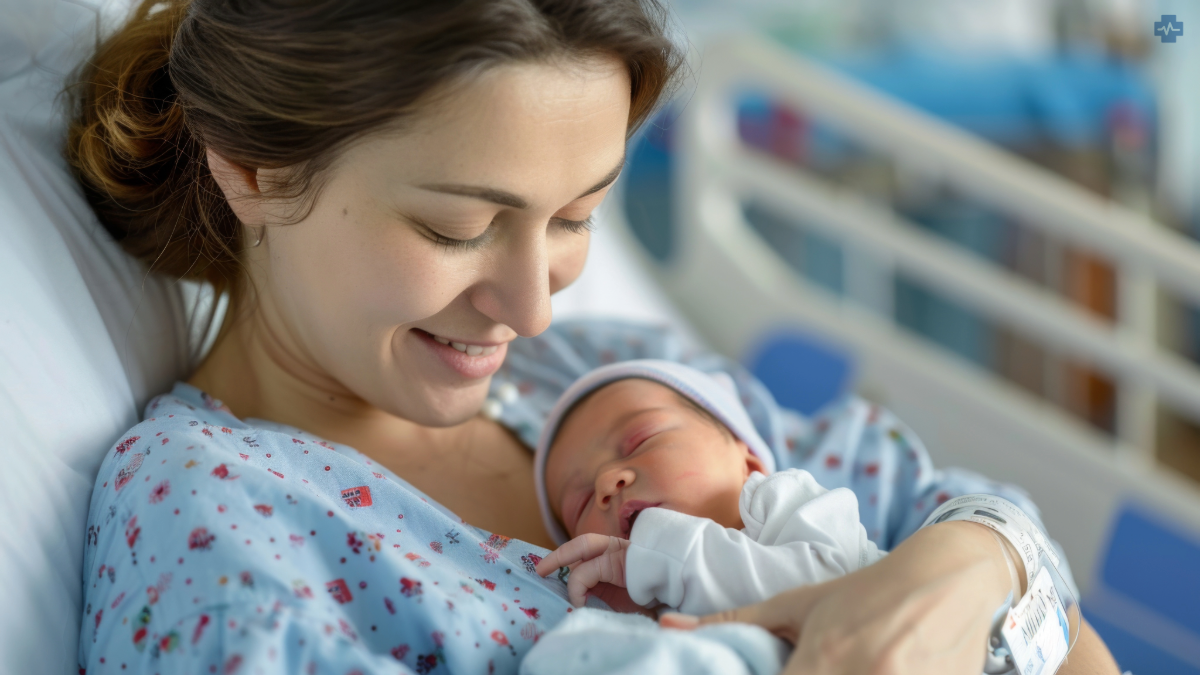
Maternal health remains a critical global health challenge, according to the National Institutes of Health. With a view of addressing this global crisis, the World Health Organisation (WHO) has launched a yearlong campaign aimed at maternal and newborn health. The campaign has been named ‘Healthy Beginnings, Hopeful Futures’, and its ultimate goal is to put an end to preventable deaths and to prioritise the long-term well-being of women and their babies.
Studies have shown that approximately 300 000 women die from pregnancy or childbirth complications every year. At the same time, over 2 million babies die within their first month of life. An additional 2 million are stillborn. Lack of healthcare infrastructure, and inadequate training of healthcare providers have been identified as factors contributing to these high mortality rates.
According to the WHO: “This equates to roughly one preventable death every seven seconds.”
Recent statistics show that from 2000 to 2023, the global Maternal Mortality Ratio (MMR) declined from 40% to 197 deaths per 100 000 live births. The Sustainable Development Goal (SDG) is to reduce these figures to 70 maternal deaths per 100,000 live births by 2030. This will require an annual rate of reduction of almost 15 percent over the next seven years (2024-2030).
However, WHO projections indicate that four out of five countries are not on track to meet the 2030 targets for reducing maternal deaths, and one in three will fail to meet targets for reducing newborn deaths.
The Vision For Infant & Mother Wellbeing
The WHO’s campaign wants to raise awareness for the need for improved maternal and neonatal healthcare. It hopes to highlight gaps in maternal and newborn survival and the need to prioritize women’s long-term health.
Campaign organisers also foresee the yearlong campaign as being instrumental in encouraging investments which will improve the health of women and babies. This, and mobilizing collective action to support parents and healthcare workers who provide critical care.
Another weapon against these high mortality rates is education. The dissemination of relevant health information related to pregnancy, childbirth and the post-neonatal period is critical if the current situation of high maternal and neonatal mortality rates in certain areas is to be addressed.
Could New Technologies Transform Maternal Health?
In addition to the WHO’s worldwide campaign, technological progress promises to further alleviate maternal and neonatal health challenges. It is anticipated that the advancement of technology will enhance the quality of services and care afforded to mothers and their babies.
The NHI explains that AI has provided an avenue for diagnosing challenges which might arise in childbirth and pregnancy. Through AI, patient monitoring can be improved, and personalized care can be provided. AI-powered technology is able to identify pregnancy complications and can facilitate remote monitoring of potentially problematic pregnancies.
According to a journal report in The Lancet, the most common cause of maternal death worldwide is haemorrhage (27 percent). This is followed by indirect obstetric deaths (23 percent), and then hypertensive disorders (16 percent). The highest proportion of haemorrhage deaths was in Africa and Asia, specifically Northern Africa and sub-Saharan Africa and Western Africa.
Gaps in maternal care in underprivileged areas, such as rural areas, can also be addressed through AI technology. A report by the NHI explains that AI-enabled telemedicine and virtual assistants are anticipated as the answer in bridging these healthcare gaps. These innovations will allow women who were previously unable to access healthcare related to pregnancy and childbirth to receive a form of quality maternal care.
Education, support from relevant stakeholders, the equipping of hospitals and staff, and the use of technology, including AI-powered technology; are all ways that maternal and neonatal health can be safeguarded. The findings and opinions are unanimous: Maternal and neonatal deaths are preventable.