
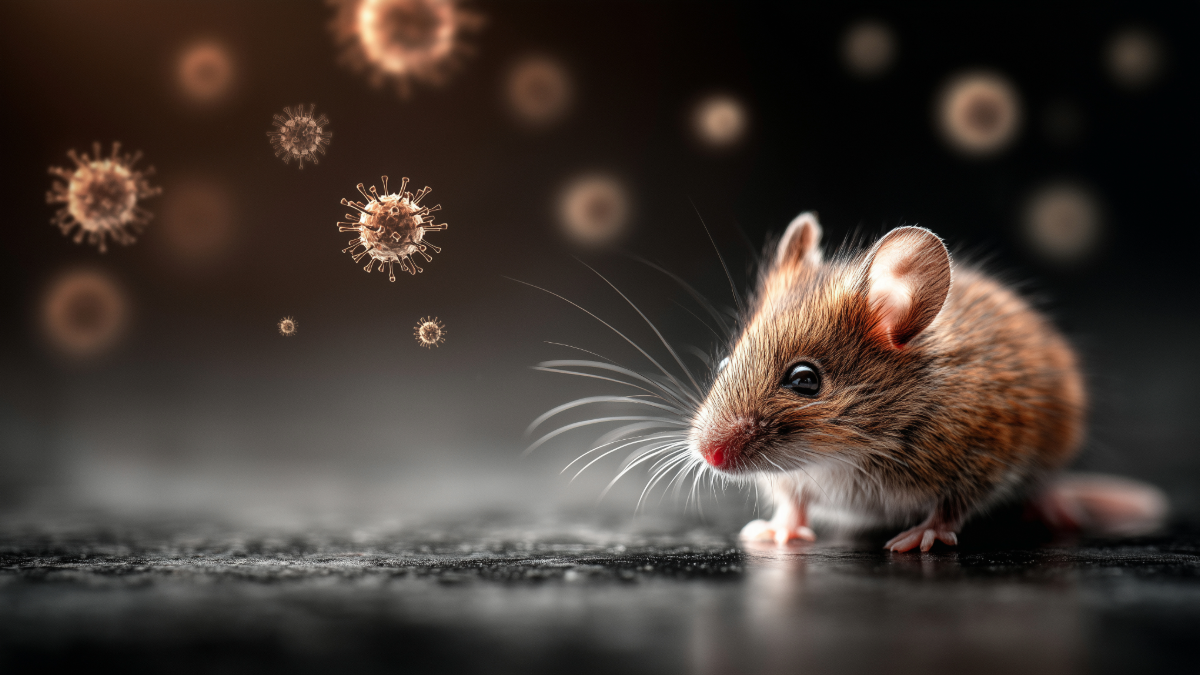
There aren’t many people who haven’t yet heard of the hantavirus outbreak which began on the cruise ship MV Hondius. The virus, linked to rats and sounding particularly malicious, has dominated news headlines, triggering a wave of alarm across social media platforms.
I have been among those asking important questions. I know that following the Covid-19 pandemic and the unfolding of events leading to the Covid lockdowns, I have become sensitive to this kind of news. Throw in a cruise ship and some images of the virus from close-up and most people are ‘triggered’ into remembering the traumas around the recent coronavirus pandemic.
I can still remember how many times news articles featured close-ups of the spiky virus. Seeing a close-up of the hantavirus made me remember the events which unfolded unexpectedly in 2020.
An article in a UK business publication read: “Health authorities around the world are racing to contain the growing hantavirus outbreak linked to the Dutch expedition cruise ship MV Hondius after new confirmed infections were identified among evacuated passengers in Europe and the United States.”
Descriptive, emotionally-charged words are used: ‘racing’, ‘growing’, ‘outbreak’, ‘confirmed infections’, ‘evacuated’… then ‘cruise ship’. The combination of these words is enough to stir fear in even the bravest among us. No-one in their right minds wants to revisit lockdown conditions or pandemic-related fears.
Endless articles have contained similar themes and like others, I have found their content hard to ignore. With three deaths reported and investigations into possible limited human-to-human transmission of the Andes strain underway, the story has reignited uncomfortable memories of early 2020.
The question I have asked alongside many others is whether the public is witnessing the beginning of another global health crisis, or a modern ‘scaredemic’ amplified by social media algorithms and post-pandemic trauma?
For the diagnostics industry, the answer lies somewhere in between. The outbreak deserves serious scientific attention. Yet the scale of online fear reveals something equally important: public trust in health communication has fundamentally changed since Covid-19.
Low Risk, High Fear
Health experts continue to stress that the current public risk remains very low. The World Health Organisation, the CDC and European health authorities have repeatedly emphasised that hantaviruses do not spread easily between humans, unlike influenza or SARS-CoV-2.
“This is not Covid-19. This is not influenza. It spreads very, very differently,” WHO epidemic lead Maria Van Kerkhove said during a recent briefing.
Hantaviruses are a family of rodent-borne viruses that have circulated globally for decades. Most human infections occur through exposure to aerosolised particles from rodent urine, saliva or droppings. Certain strains, particularly the Andes virus found in South America, have shown rare but limited person-to-person transmission.
Still, cruise ships create a perfect storm for public fear. Confined spaces, international passengers, quarantine scenes and hazmat imagery carry strong psychological associations with pandemic storytelling. Covid-19 permanently changed how people interpret infectious disease news. The moment a virus appears on a ship, social media immediately fills in the blanks.
On Reddit, users openly described ‘spiraling’ after seeing hantavirus content repeatedly appear in their feeds. Others compared the emotional atmosphere directly to the beginning of the coronavirus pandemic.
This reaction is not irrational. It reflects what psychologists call ‘availability bias’. This is the tendency to judge risk based on how vividly examples come to mind. After years of pandemic conditioning, dramatic outbreak imagery now triggers immediate emotional recall. The brain remembers empty supermarket shelves, lockdowns, travel restrictions and death counts long before it evaluates statistical probability.
Social media platforms intensify this effect because fear spreads faster than reassurance. Calm explanations rarely outperform alarming speculation in engagement metrics. A headline saying ‘Experts say risk remains low’ competes poorly against videos suggesting ‘another pandemic has started.’
Algorithmic Amplification Of Health Anxiety
The result is what some analysts now describe as ‘algorithmic amplification of health anxiety.’
Unlike previous decades, public health scares no longer spread primarily through newspapers or television broadcasts. They spread through emotionally-charged clips, reaction videos and doomscrolling loops. Every repost signals importance. Every anxious comment increases visibility. Fear becomes self-reinforcing.
For diagnostic professionals, this presents a major communication challenge. The modern public no longer distinguishes clearly between verified epidemiology and emotionally persuasive content.
At the same time, dismissing public concern outright would be a mistake. Outbreak vigilance matters. Rapid diagnostics, sequencing and coordinated international monitoring are exactly what prevent localised events from escalating into wider crises.
The WHO response to the cruise ship outbreak demonstrates how much outbreak management has evolved since Covid-19. International coordination began rapidly, passengers were isolated and monitored, sequencing efforts started immediately and global health agencies issued frequent public updates.
That visibility may itself contribute to public anxiety. Ironically, improved surveillance can make the world feel more dangerous because people hear about outbreaks earlier and more often than ever before.
The history of rodent-borne disease also feeds public imagination. Rats and mice have occupied a unique symbolic role in human fear for centuries. The Black Death of the 14th century, though now understood to involve more complex transmission pathways than rats alone, cemented rodents in cultural memory as harbingers of plague and societal collapse.
Even today, rodent outbreaks generate disproportionate emotional responses compared to more statistically significant threats like cardiovascular disease or diabetes.
Historically, rat populations have surged during periods of urban crowding, war, flooding and waste accumulation.
In the United States, hantavirus first gained major attention during the 1993 Four Corners outbreak, where infected deer mice transmitted the virus to humans in the American Southwest. The mortality rate shocked health authorities because hantavirus pulmonary syndrome can progress rapidly and severely once symptoms develop.
Yet despite its severity, hantavirus remains extremely rare.
The Rise Of The ‘Anticipatory Outbreak’
That gap between rarity and emotional impact is precisely why the story thrives online. Humans are wired to pay attention to threats that feel invisible, unpredictable and difficult to control.
Cruise ships add another layer. Since the Diamond Princess Covid-19 outbreak in 2020, ships have become visual shorthand for contagion narratives. A single infected vessel now attracts global attention within hours.
Some experts believe social media has effectively created a new category of public health event: the ‘anticipatory outbreak,’ where fear spreads globally long before the disease itself does.
The diagnostics sector therefore occupies a crucial role not only in detection, but in public interpretation. Clear communication around risk, transmission pathways and testing accuracy has become as important as laboratory capability itself.
The public can protect itself from exaggerated claims, but doing so requires deliberate media literacy habits. One useful rule is to distinguish between ‘novel,’ ‘rare’ and ‘highly transmissible.’ A disease can be unusual and severe without posing a broad population threat.
People should also watch for certain warning signs in health reporting. Claims that rely heavily on emotional language, vague insider warnings or predictions of societal collapse usually indicate speculation rather than evidence-based reporting.
Reputable coverage tends to include epidemiologists, public health agencies and transparent discussion of uncertainty.
Another important distinction is between confirmed data and social media extrapolation. The current hantavirus outbreak involves a very specific environment, a limited number of cases and intensive monitoring. That is fundamentally different from widespread uncontrolled community transmission.
Public trust also depends on resisting the opposite extreme: dismissing all concern as hysteria. People remember that early Covid-19 warnings were initially underestimated. That memory makes many users hypervigilant today. In psychological terms, society may be experiencing a form of ‘collective post-pandemic threat sensitivity.’
The challenge now is balance. Health scares become dangerous both when threats are ignored and when fear overwhelms proportion. Anxiety itself carries health consequences, from chronic stress and sleep disruption to compulsive doomscrolling and information overload.
Perhaps the deeper lesson of the hantavirus story is not simply about infectious disease, but about how digitally-connected societies process uncertainty. The virus itself may remain contained, however, the emotional contagion surrounding outbreaks has become global, instantaneous and algorithmically-accelerated.
For diagnostics professionals, that means the future of outbreak response will involve more than identifying pathogens. It will also require helping the public interpret risk rationally in an age where fear travels faster than infection itself.