
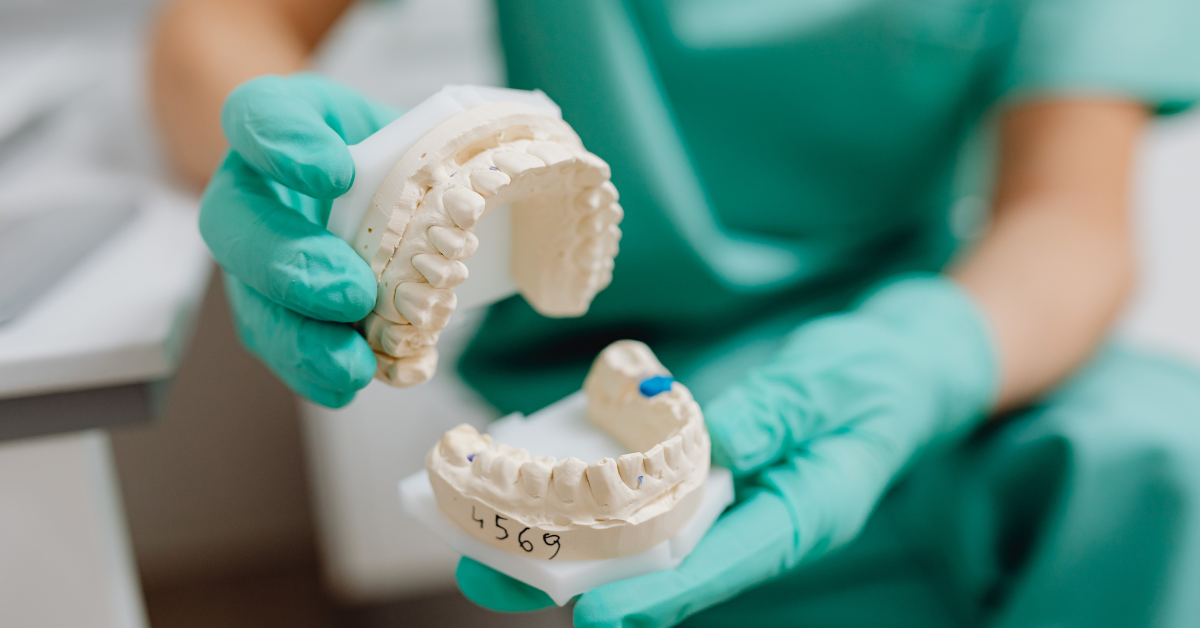
A bright smile is often linked to straight teeth, and for good reason. Crooked or misaligned teeth can create hard-to-reach areas in the mouth, making it easier for plaque to build up and increasing the risk of cavities, tooth decay, and gum disease. Simply put, straight teeth are easier to clean and maintain.
And braces have been the go-to solution for achieving a perfectly aligned smile. In England and Wales alone, around 200,000 children and teenagers begin orthodontic treatment each year. Plus, across the UK, it is actually estimated that roughly 1.5 million people currently have braces or are undergoing some form of orthodontic care.
But what if you could straighten your teeth without braces? Enter Myobrace, an innovative orthodontic system that targets the root causes of misaligned teeth rather than just the symptoms.
Braces Through The Ages
Did you know that around 40% of British adults are unhappy with the appearance of their teeth. And another recent oral health survey revealed that 23% of adults avoid showing their teeth when smiling due to confidence issues, while 13% report low self-esteem linked to their dental appearance.
And for centuries, primitive to modern braces have been used to pave the way for countless happier smiles. Braces also paved the way for Myobrace.
You might be surprised to learn that archaeologists have actually discovered ancient Egyptian mummies, dating back to around 1500 BCE, with crude metal bands wrapped around their teeth, possibly held in place with catgut.
Fast forward to 1728, French dentist Pierre Fauchard described a device called a “bandeau”. This was a horseshoe-shaped metal piece designed to expand the dental arch and thus align the teeth. In fact, this is one of the earliest recognisable precursors to modern braces.
And in the 1990s and 2000s, clear braces and ceramic brackets grew in popularity, soon followed by invisible aligners like Invisalign, offering more discreet options for dental correction.
Yet, from ancient innovations to modern technology, most of these solutions focus on straightening crooked permanent teeth rather than addressing the underlying causes, such as mouth breathing or poor tongue posture.
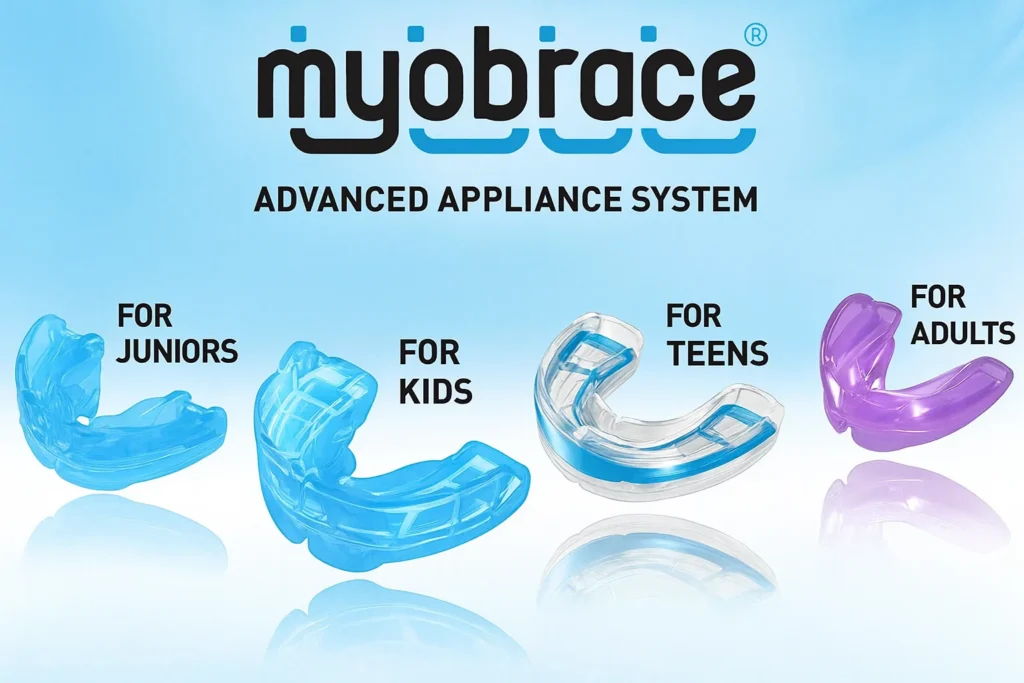
This is where Myobrace truly shines. Resembling a mouthguard, it gently guides jaw development and can help prevent more serious oral issues later on. While Myobrace is primarily designed for children aged 3 to 15 (a critical period when the jaw and facial bones are still developing), adults can benefit from Myobrace as well. Although it is generally less effective than during the early developmental years, it can still improve myofunctional habits, such as tongue thrusting and mouth breathing, and may contribute to slightly straighter teeth in permanent dentition.
However, parents, we are looking at you! Myobrace can help ease the financial burden of orthodontic treatment by reducing, or in some cases even eliminating, the need for braces during adolescence or adulthood later on.
A Deeper Dive Into Myobrace
The treatment is part of a broader approach called myofunctional orthodontics, which focuses on the idea that many dental issues arise from incorrect oral habits rather than genetics alone. The Myobrace system is designed to correct these habits and guide proper oral development.
While Myobrace itself is relatively new, the concept is not, and dates back to the early 1900s, when orthodontists and speech therapists first explored these methods. By the 1970s and 1980s, orthodontists were experimenting with removable appliances designed to guide jaw development in children, rather than simply repositioning their teeth as braces are designed to do.
And in 1990, the modern Myobrace system was developed by Australian orthodontist Dr William “Bill” McNamara. However, it was only in the 2000s, when the Myofunctional Research Co. began promoting the system globally, bringing this habit-focused approach to people around the world.
The treatment usually follows these steps:
- Assessment: A dentist or orthodontist evaluates the patient’s teeth, jaw development, and oral habits to determine if Myobrace is suitable.
- Appliance Selection: The patient receives a series of removable Myobrace devices, each designed for different stages of development and correction.
- Daily Use: The appliances are typically worn for 1 to 2 hours during the day and overnight while sleeping. Consistency, however, is key to achieving results.
| Feature | Myobrace System | Traditional Braces (Metal/Ceramic) | Invisalign (Clear Aligners) |
| Primary Goal | Preventive & Habit Correction. Addresses root causes like mouth breathing, tongue thrust, and encourages natural jaw development. | Mechanical Tooth Movement. Corrects existing malocclusion (misaligned teeth/bite). | Mechanical Tooth Movement. Corrects existing malalignment/bite issues (mild to moderate cases). |
| Mechanism | Removable intra-oral appliance and myofunctional exercises to correct poor habits and guide natural growth. | Fixed brackets and wires apply continuous force to physically move teeth. | Series of custom-made, clear, removable aligners apply gentle force to gradually shift teeth. |
| Visibility | Low (worn mostly at home/night), but not invisible when worn. | Highly visible (especially metal). Ceramic are less visible. | Virtually invisible (highly aesthetic/discreet). |
| Treatment Complexity | Best for early intervention, habit correction, and mild-to-moderate alignment issues. Helps prevent the need for braces later. | Effective for all complexities, including severe crowding, rotations, and complex bite issues. | Best for mild-to-moderate cases. Less effective for highly complex or severe bite corrections. |
| Duration (Average) | 12–24+ months (depends heavily on compliance and habit correction). | 18–36 months (varies significantly by case complexity). | 6–24 months (often 12–18 months for common cases). |
| Impact On Hygiene | Easiest. Appliance is removed for normal brushing and flossing. | Hardest. Brackets and wires require careful, specialised cleaning to prevent plaque buildup. | Easy. Aligners are removed for normal brushing, flossing, eating, and drinking. |
| Comfort | Generally very comfortable. Initial adjustment period for habits. | Can cause discomfort/soreness after adjustments; metal can irritate cheeks/gums. | Generally comfortable. Mild pressure/soreness when switching to a new aligner set. |
| Patient Compliance | Crucial for success (daily wear and exercises). | Low requirement (fixed appliance). | Crucial for success (must be worn 20-22 hours/day). |
| Typical Cost Range | Generally lower than full braces or Invisalign (due to early, non-complex focus). | Variable, but often the most cost-effective fixed option. | Higher end, often comparable to or more than traditional braces. |
But, does it REALLY work? In a study of Myobrace treatment in children, approximately 92% of participants consistently wore the appliance for the recommended 1 to 2 hours daily, in addition to overnight use, contributing to positive treatment outcomes. Plus, on the official Myobrace website, several adult cases are highlighted, showing that treatment (sometimes even combined with braces) successfully achieved and maintained dental alignment without the need for permanent retainers after roughly 22 to 23 months.
Bringing It All Together
Myobrace represents a shift in orthodontics, moving away from purely mechanical solutions toward a more holistic, preventive approach. By targeting the underlying causes of misaligned teeth, it offers a gentle, effective alternative to traditional braces.
Plus, it is not only a method that not only transforms smiles but also instills lifelong habits that contribute to overall facial and dental well-being.