
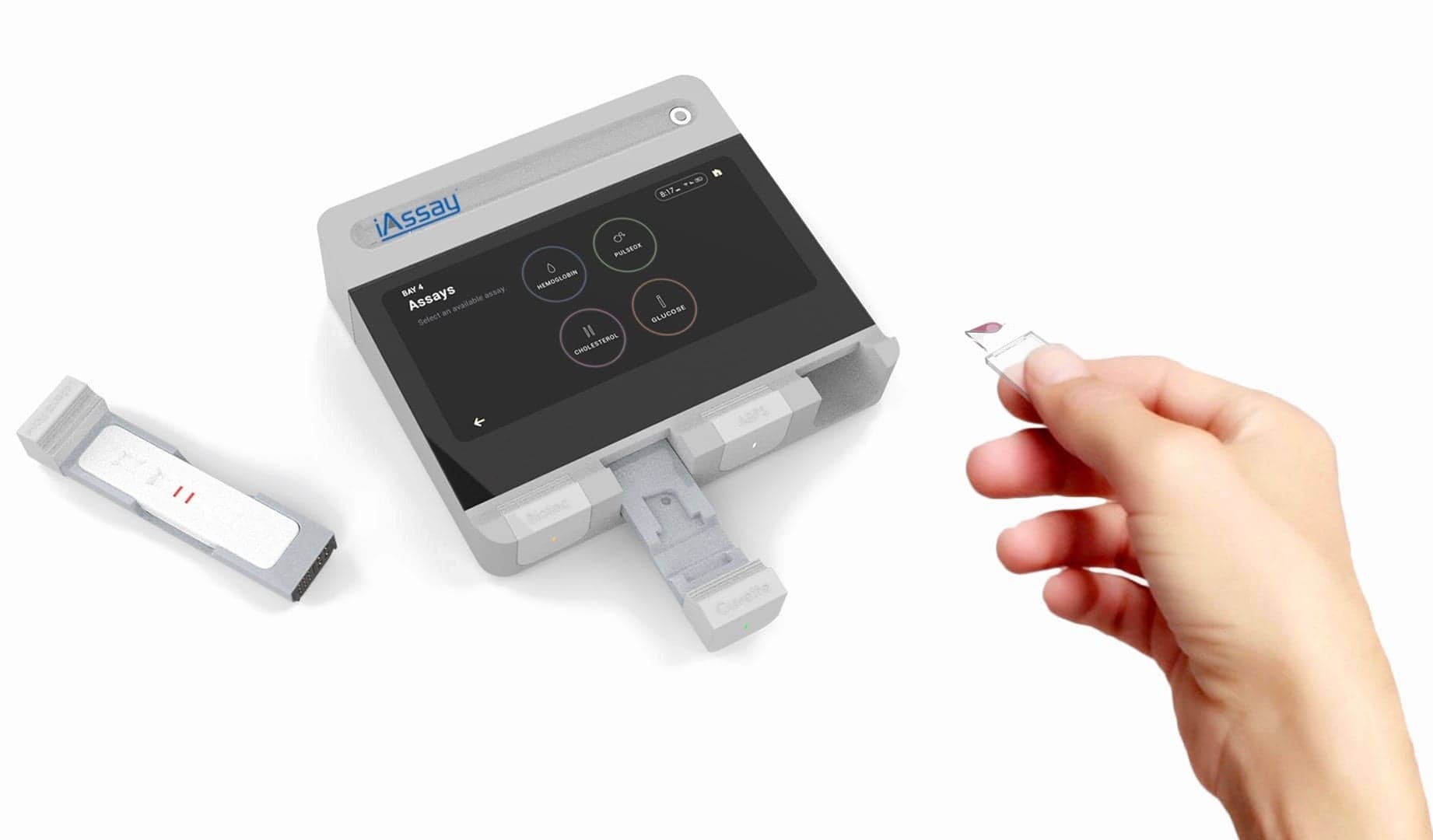
‘Diagnosis’ used to be something that was chiefly in the hands of clinic professionals, and generally inaccessible to the public. However, technological advancements have made it possible for various conditions to be detected, even within one’s home.
Miniaturised biosensors, lab-on-chip devices and multiplexed detection have become serious contenders in frontline medicine and these allow for Point-Of-Care (POC) diagnostics.
According to the Market Data Forecast the POC diagnostics market in Europe was worth USD 8,39 billion in 2024. This is expected to grow at a CAGR of 9.72 percent from 2025 to 2033, and be valued at US 19,34 billion by the end of 2033, from USD 9,21 billion in 2025.
POC diagnostics refers to medical tests which are performed at or near the site of patient care, rather than in a centralised laboratory.
The main goal of these tests is to provide rapid, accurate results so that healthcare providers can make immediate decisions about diagnosis, treatment, or disease management.
Here Are Some Key Features Of POC Diagnostics:
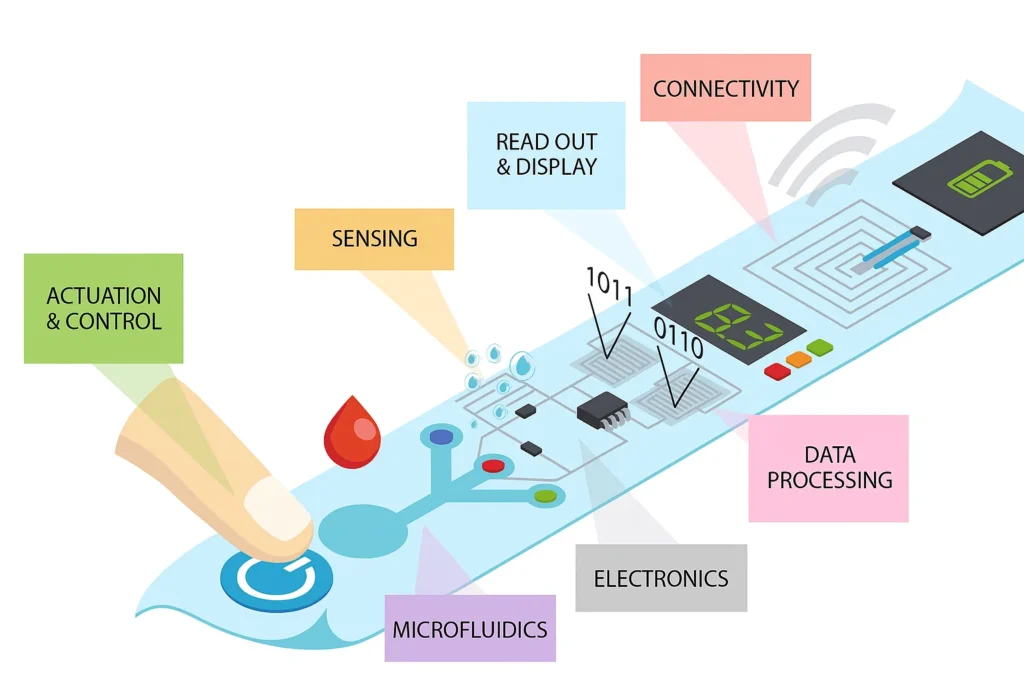
Near The Patient
Tests are done in clinics, hospitals, pharmacies, or even at home, rather than waiting for a lab.
Rapid Results
Most POC tests provide results in minutes to a couple of hours, rather than days.
Simplicity
Designed to be easy to use, often requiring minimal training.
Actionable
The results can immediately inform treatment decisions, such as prescribing medication or adjusting therapy.
New scientific advancements are transforming POC diagnostics. These include optical microcavities capable of sensing single molecules, quantum-enhanced detectors pushing the limits of sensitivity, and microfluidic platforms running several assays from just one drop of blood.
Detecting Molecules With Light
Imagine a tiny ring of light so sensitive that it can pick up the presence of a single molecule. That’s how Whispering-Gallery-Mode (WGM) microcavities and microlasers work.
When a molecule lands on the surface, it changes how the light travels, causing a measurable shift in wavelength.
Researchers at the University of St Andrews recently showed that these devices can detect even very short pieces of DNA when combined with special nanoparticles.
These miniature sensors could one day replace bulky lab equipment with ultra-sensitive tests that don’t need dyes or labels.
Quantum Biosensing
Quantum biosensing takes advantage of the certain rules of quantum physics, such as concepts of entanglement and spin coherence. It uses these rules to make sensors more precise than traditional devices.
The UK has invested heavily in this field, funding national ‘quantum hubs’ led by universities. The goal is to use quantum effects to detect diseases such as cancer or Alzheimer’s much earlier than current tools allow.
As reported by The Guardian, these hubs are already moving beyond theory and into applied demonstrations.
Lab-On-A-Chip
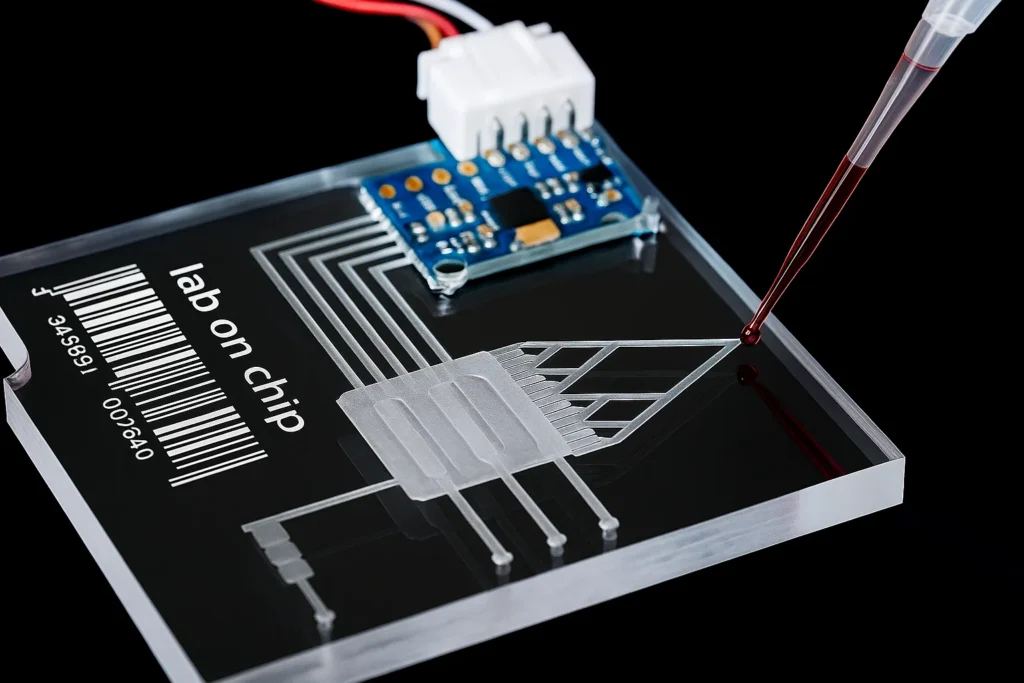
This advancement has been referred to as a ‘portable laboratory in your hand’. Instead of waiting days for lab results, lab-on-chip devices can run several tests in just minutes using a single drop of blood.
These microfluidic platforms combine sample preparation, fluid control and multiple types of detection in one small, handheld system. Today’s devices can check for panels of biomarkers, such as those used to assess kidney function, without the need for a full laboratory. According to Wiley Online Library, these technologies are becoming essential tools for relieving pressure on hospitals while speeding up clinical decision-making in community settings.
Even with all the excitement around point-of-care (POC) diagnostics, there are still some big hurdles to overcome. Here are some of them:
Sensitivity And Specificity
One of the main issues is sensitivity and specificity. While lab experiments can detect single molecules under perfect conditions, real-life samples like blood, sputum, or stool are messy. They contain proteins and other substances which can confuse the sensors.
As the University of St Andrews points out, preparing samples directly on a chip remains one of the hardest challenges for these devices.
Multiplexing
Another problem is multiplexing. This means testing for multiple targets at once. Adding more targets can cause interference and make signals harder to interpret. Many POC systems need complex calibration and software to work correctly, which slows down regulatory approval. Some solutions, like barcode tagging or separate readouts, help but also make the devices more complicated and expensive.
Cost And Production
Cost and production are also barriers. High-tech optical and quantum sensors often require rare materials or very precise conditions, like extremely cold temperatures. Making these affordable and disposable is a challenge. Unless a POC test can replace several traditional tests or prevent costly treatments later, it may struggle to compete with cheap lab tests or lateral flow devices.
Robustness And Usability
These factors are crucial for real-world adoption. POC diagnostics need to work in busy clinics, rural health posts, and pharmacies. Devices that are fragile, need expert handling, or require delicate set-up are less likely to be used widely. Making chips tougher, interfaces simpler, and calibration automatic is key to success.
To Summarise What We Have Learned
To turn these breakthroughs into everyday medical tools, numerous challenges will need to be overcome.
First, sample preparation, getting real-world samples like blood or saliva ready to test, must be built directly into the chip.
Second, manufacturing has to make these devices cheap enough to be used widely, ideally as disposable cartridges.
Third, clinical validation is essential. Devices must be tested in real-world conditions with actual patients to prove they work reliably, not just in labs.
Reaching these goals will take collaboration across many fields: engineering, clinical medicine, regulation, and manufacturing.
The UK is already encouraging this kind of teamwork with targeted funding, creating the partnerships needed to bring these cutting-edge diagnostic tools from the lab bench into GP surgeries, pharmacies, and hospitals.