
Tech giant Apple has never ceased to pull out all of the stops in terms of innovation and wow-factor. Now, the company has announced a new AI initiative, which it has called Apple AI Doctor.
The new AI-powered application could hyper-personalise health advice and medical guidance, helping to predict and prevent full-blown health conditions before they happen. For example, its developers say it will be able to ascertain whether someone is prediabetic, and to give advice and assistance to stop full-blown diabetes from developing.
Breaking news reports have given a sneak preview into the up-and-coming Apple initiative, saying that its developers envisage an AI-powered tool which provides the means to track everything, ‘from the food you eat to deadly health conditions’, using AI!
Apple CEO Tim Cook spoke about the new virtual health service, highlighting that he had always anticipated Apple’s legacy to be in healthcare. Already, Apple has a watch which facilitates healthy living, and its innovative Health App. These link together in a highly-sophisticated system.
The world-renowned Apple Health App will be transformed in coming months into a medical assistant, says reports. The app’s AI applications will be able to merge information from various sources, such as watches, phones, and other health data, to provide timely and hyper-personalised health suggestions.
The Evolution of Apple’s Healthcare Innovations
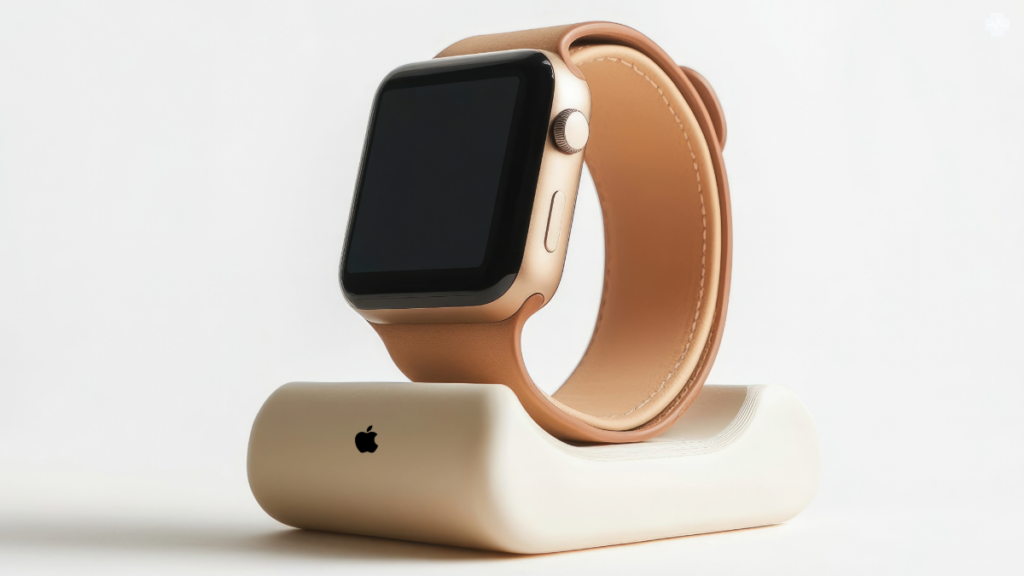
The Apple watch, designed to facilitate mindful and healthy living, was first unveiled in 2014. It left a great impression then and still does! Just over ten years later, it continues to amaze with its ongoing transformations.
Over the years, the watch has become more sophisticated, allowing it to track health and fitness. It is waterproof and can be used in the pool and while swimming. It has a step counter and can be used to track steps. It can take a person’s heart rate. It can be set to give important health reminders, such as reminders to drink a glass of water.
Most recently, it has become a central hub for different services and applications. With its connection to the Health App and the evolution of the app through AI, the Apple system is definitely pioneering new frontiers in healthcare.
Apple Products Health Features
| Product/Feature | Description |
| Apple Watch ECG App | Records an electrocardiogram (ECG) to detect signs of atrial fibrillation (AFib). FDA cleared for users 22+. |
| Irregular Rhythm Notifications (Apple Watch) | Checks heart rhythm in the background and notifies users of irregular rhythms suggestive of AFib. FDA cleared for users 22+. |
| High and Low Heart Rate Notifications (Apple Watch) | Alerts users if their heart rate is unusually high or low, which could indicate a serious condition. |
| AFib History (Apple Watch & Health App) | Estimates how frequently a user’s heart rhythm shows signs of AFib over time. Qualified by FDA as a Medical Device Development Tool (MDDT). |
| AirPods Pro (2nd Generation) Hearing Aid Feature | Functions as an over-the-counter (OTC) hearing aid for adults with perceived mild to moderate hearing loss. FDA authorized software. |
| Apple Health App | Central app to store and manage health data from Apple devices and compatible third-party sources. Integrates data from FDA-cleared features. |
| Cycle Tracking (Apple Watch & Health App) | Allows users to track their menstrual cycle, log symptoms, and receive notifications for periods and fertile windows. Can also notify of possible cycle deviations. |
| Fall Detection (Apple Watch) | Detects hard falls, displays an alert, and can automatically call emergency services if the user is unresponsive. Automatically enabled for users 55+. |
| Medical ID (iPhone & Apple Watch) | Allows first responders to access critical medical information (allergies, medications, emergency contacts) from the Lock screen. |
| Medications (iPhone, iPad & Apple Watch) | Helps users track and manage their medications, receive reminders, and see adherence over time. |
AI Healthcare Companions Are Here to Stay
It is anticipated that AI-powered virtual health assistants and AI companions will become more commonplace in the future. These smart applications will be able to schedule appointments, manage medication and allow for round-the-clock support for the management of chronic diseases. They will also provide patients with more accessibility to healthcare support and information.
With all possibility, these virtual companions will shape our future experiences of healthcare.