
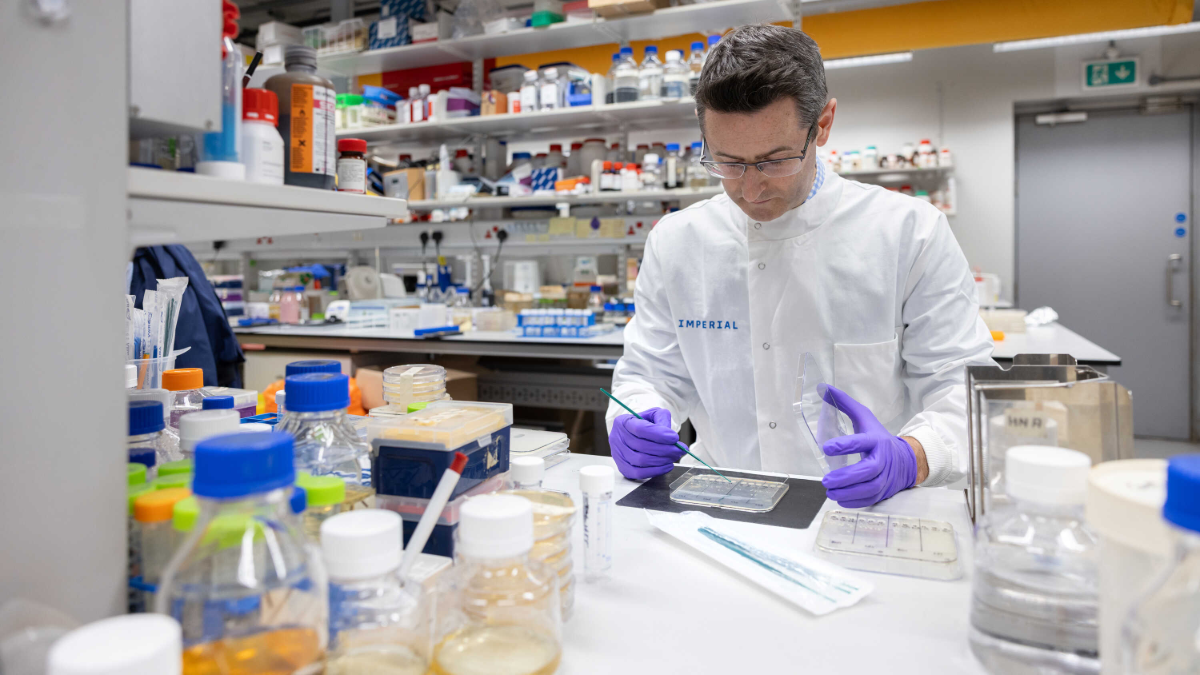
In a striking development for global health, Imperial College London’s Fleming Initiative has secured £3.1 million in funding from a consortium of international partners, including the notorious Bill & Melinda Gates Foundation, Novo Nordisk Foundation and Wellcome, to accelerate the search for new antibiotics targeting some of the most formidable bacterial foes. So called gram-negative pathogens. The announcement, made today, signals renewed urgency in the battle against antimicrobial resistance (AMR), a public-health threat that could claim an estimated 10 million lives per year globally by 2050 if left unchecked.
The Fleming Initiative, Imperial’s multidisciplinary research programme named in honour of Sir Alexander Fleming, positions itself at the intersection of artificial intelligence, microbiology and chemistry, with a mission to overcome longstanding scientific barriers in antibiotic development. Gram-negative bacteria, such as Escherichia coli, Klebsiella pneumoniae and Pseudomonas aeruginosa, are notoriously resistant to many existing drugs, owing to their double-membrane cell walls and efficient efflux pumps. These same organisms are responsible for a substantial share of hospital-acquired infections, particularly in vulnerable patients, and are among the highest priorities for new therapies according to the World Health Organization.
The £3.1 million package is the product of three major global health funders, each bringing a distinct strategic focus. The Gates Foundation, long involved in infectious disease and vaccine development, underscores the persistence of AMR as a threat to global mortality and health equity. The Wellcome Trust, which has previously invested more than £850 million in AMR research, sees the Fleming Initiative as a key piece in a broader global research mosaic. The Novo Nordisk Foundation’s support reflects a growing trend among industry-aligned funders to direct resources toward foundational science and novel therapeutic modalities.
Crucially, this funding arrives at a moment when antibiotic discovery pipelines have struggled for decades. The traditional pharmaceutical model, where high development costs are paired with relatively low financial returns, has led many large drug companies to downsize or exit antibiotic research altogether. As a result, the world has endured a 40-year drought of truly novel antibiotic classes, leaving clinicians to rely on older, increasingly ineffective drugs.
AI, Microbiology and Chemistry Converge
What sets the Fleming Initiative apart is its concerted effort to combine cutting-edge techniques from multiple disciplines. Researchers will integrate machine learning algorithms with high-throughput microbiological screening and synthetic chemistry to identify and optimise molecules capable of breaching the formidable defenses of Gram-negative pathogens.
Dr Lisa Thompson, co-lead investigator of the Initiative’s AI component, explains the logic behind the approach: “Instead of screening compounds in isolation, AI lets us predict patterns of bacterial vulnerability and resistance. We’re training models on billions of data points, genetic sequences, structural chemistry, phenotypic outcomes, to surface candidates we might never have seen through traditional screening.”
Simultaneously, microbiologists are mining environmental and clinical bacterial isolates for unconventional metabolic pathways that could reveal new antibiotic targets. Chemists, armed with structural insights and AI predictions, will synthesise and refine molecules to improve potency, selectivity and safety.
The programme will also emphasise mechanism-based screening, seeking compounds that do more than inhibit bacterial growth in a petri dish, they must evade known resistance mechanisms and demonstrate efficacy in increasingly realistic biological models.
Why Gram-Negative Bacteria Matter
Gram-negative pathogens account for a disproportionate share of the most difficult infections in modern medicine, especially in intensive care and post-surgical settings. Their outer membrane and efflux systems repel many antibiotics that work against Gram-positive bacteria, such as Staphylococcus aureus. According to recent data from the European Centre for Disease Prevention and Control, multidrug-resistant Gram-negative organisms contribute to tens of thousands of deaths annually in Europe alone, with the burden heaviest in older adults and immunocompromised patients.
This resistance also extends to last-resort drugs like carbapenems, sparking fears of untreatable infections. The Fleming Initiative’s focus on these pathogens thus addresses a critical gap in the global therapeutic arsenal. More than 75 % of AMR-related fatalities are now attributed to pathogens with significant Gram-negative resistance profiles, underlining the public-health stakes.
While £3.1 million is modest by pharmaceutical industry standards, its strategic value lies in de-risking early discovery and generating proof-of-concept data that could attract further investment. Historically, the “valley of death” between academic discovery and commercial development has been where many promising antibiotics have faltered. By supporting integrated discovery, early validation and collaborative dissemination of data, the Fleming Initiative aims to shorten that gap.
The project’s backers have signalled a willingness to foster open science collaborations, sharing non-proprietary data with the broader research community to accelerate collective progress. Wellcome’s executive director for science, Professor Harriet Mills, said in a statement: “No single institution or company can tackle AMR alone. This is a global challenge requiring transparent, cross-sector partnerships.”
Antimicrobial resistance has featured prominently in global health security dialogues. In 2025, the United Nations held a high-level meeting reiterating its urgency, and the UK government has committed to reducing AMR’s burden through national strategies and surveillance networks. Yet despite this attention, antibiotic discovery, the linchpin of therapeutic response, has lagged behind.
Public health experts caution that without new classes of antibiotics and smarter deployment strategies, routine procedures such as joint replacements, chemotherapy and organ transplants could become risk-laden undertakings. The Fleming Initiative’s funding, and the technological approaches it embraces, represents one of the more tangible advances in bridging the science gap that threatens to undermine modern medicine.
What’s Next
Over the next three years, Imperial’s team plans to generate a robust pipeline of candidate molecules, progressing the most promising toward preclinical development. Early milestones include the establishment of an AI-enhanced screening platform, publication of foundational datasets, and preliminary evaluation of candidate structures in advanced biological models.
For clinicians grappling with resistant infections daily, the news brings cautious optimism. As Professor James Underwood, an infectious disease expert not involved in the initiative, put it: “This kind of funding and scientific convergence is exactly what antibiotic discovery needs. It’s not a silver bullet, but it may be the most potent shot we’ve had in years.”
In the long fight against superbugs, the Fleming Initiative’s £3.1 million could prove a small investment with outsized return, not just in scientific knowledge, but in lives saved.